

Load Shedding Is a Logistics Problem, Not Just a Power Problem
When Eskom announces Stage 4, most South Africans think about cooking dinner on a gas stove or charging their phone at the office. Courier companies think about something else entirely: the 147 traffic lights that just went dark on their Johannesburg delivery routes, the sorting hub in Midrand that needs to switch to generator power, and the 23 drivers whose tracking devices just went silent because the cell towers in their zone are running on backup batteries that died 45 minutes ago.
Load shedding is not an inconvenience for courier networks. It's a systematic operational disruption that hits every layer of the delivery chain simultaneously. The delays are real, measurable, and getting worse as infrastructure degrades.
Five Ways Load Shedding Breaks the Courier Chain
1. Traffic Lights Out = Delivery Routes Collapse
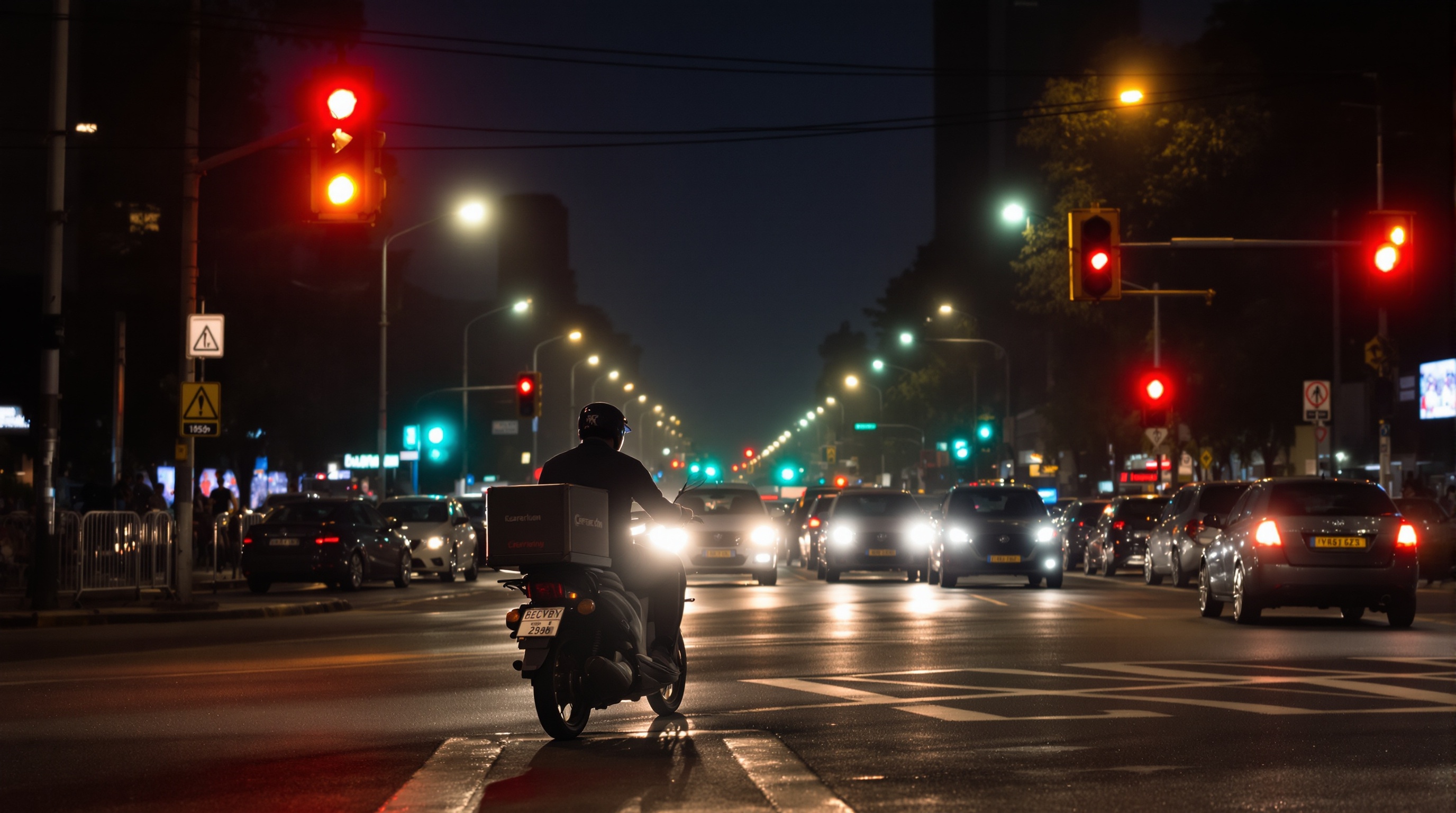
During load shedding, major intersections become four-way stops. A delivery route that normally takes 45 minutes can stretch to 90 minutes or longer. In Johannesburg, the Groenkloof-N1 interchange alone adds 15–25 minutes during a Stage 4 outage. Multiply that across a driver's 30-stop route, and you're looking at 2–3 hours of pure traffic delay — time that was supposed to be spent delivering parcels.
Some couriers factor this in. Most don't. The result is a 3 PM same-day delivery turning into "we'll try again tomorrow."
2. Tracking Goes Dark
Real-time GPS tracking depends on two things working simultaneously: the driver's phone or scanner transmitting location data, and the cell towers in the area having power. During load shedding, both can fail. Drivers in residential areas and smaller towns are particularly affected — cell towers in these zones often have backup batteries that last 2–4 hours, and once those die, tracking goes completely dark until power returns.
Your parcel is still moving. You just can't see it. For a sender waiting on proof of delivery for a time-sensitive item, that gap is infuriating.
3. Depot Operations Slow to a Crawl
Most courier depots have generators. But generators power the essentials — scanners, a few computers, the server room. They don't power the conveyor belts, the full lighting grid, the air conditioning, or the full sorting machinery. During load shedding, depot throughput drops by 30–50% depending on the stage and the depot's generator capacity.
Parcels that should have been sorted and loaded onto the 6 PM overnight truck sit on the depot floor until 8 PM or later. That's a two-hour head start the next morning's deliveries never get back.
4. Driver Communication Breaks Down
When a driver can't reach the depot because their phone battery is dead after a four-hour outage and their in-vehicle charger is running off a car battery that's seen better days, the depot can't reroute them. They can't update customers. They can't confirm whether a delivery was completed. The entire operational layer — the part that turns a network of vehicles into a coordinated delivery system — goes silent.
5. Cold Chain Integrity Is at Risk
For medical couriers transporting temperature-sensitive specimens, load shedding is a direct threat. Refrigerated storage at depots relies on consistent power. A four-hour outage during a hot Johannesburg afternoon can push a cold storage unit from 4°C to 12°C — enough to compromise blood samples, vaccines, and pathology specimens. Medical couriers invest heavily in backup cooling, but not all providers maintain the same standards.
Load Shedding Impact by Stage — Average Delivery Delay
- Stage 1–2: 15–30 minute delays. Minor traffic disruption. Most depots handle it with minimal impact.
- Stage 3–4: 45–90 minute delays. Multiple intersections affected. Depot throughput drops 20–30%. Tracking outages begin in residential areas.
- Stage 5–6: 2–4 hour delays. Widespread traffic light outages. Depot generators straining. Cell tower battery depletion in some areas. Overnight sorting delayed.
- Stage 7–8: Delivery schedules collapse. Same-day becomes next-day. Tracking unreliable across multiple zones. Only couriers with dedicated backup infrastructure maintain partial service.
How Smart Shippers Plan Around Load Shedding
Know the Schedule and Book Around It
This sounds obvious, but most businesses don't do it. If your area is scheduled for load shedding from 12:00 to 14:30, don't book a same-day collection for 12:30. Book it for 10:00 — before the outage starts — or 15:00, after it ends. The difference between collecting at 10:00 versus 12:30 during Stage 4 can be the difference between same-day delivery and next-day delivery.
Use Couriers With Generator-Backed Depots
Not all courier depots are equal. The largest national carriers have invested in industrial generators and UPS systems that keep sorting operations running at near-full capacity during outages. Smaller operators may have a small generator for the office lights and nothing for the sorting floor. Ask your courier: "What happens at your depot during Stage 6 load shedding?" If they can't answer clearly, that's a red flag.
Build Buffer Time Into Your Deadlines
If you need a document filed at the High Court by 3 PM, and the load shedding schedule shows an outage from 12:00–14:30 in the delivery zone, don't book a courier for 11:00 with an estimated 3-hour delivery window. Book for 9:00. Give yourself the full morning. During Stage 4 and above, add 60–90 minutes to your normal delivery expectations.
Have a Backup Courier on Speed Dial
This is especially important for legal document courier and medical courier users. During high-stage load shedding, your primary courier's network may be overwhelmed. Having a secondary courier with a different depot network — preferably one in a different Eskom load shedding zone — gives you a fallback when the primary can't deliver on time.
Use Parcel Lockers as a Load Shedding-Proof Option
Parcel lockers operate 24/7 and are typically located at shopping centres and fuel stations that have backup generator power. During load shedding, a locker delivery eliminates the failed-delivery risk entirely — the parcel goes into a powered, secure locker, and the recipient collects when they can, regardless of the outage schedule.
What a Load Shedding-Ready Courier Looks Like
- Generator-backed depots that maintain sorting operations during outages
- Drivers equipped with power banks and dual-SIM devices for network redundancy
- Proactive communication — SMS updates when tracking is temporarily unavailable
- Load shedding-adjusted ETAs that factor in known outage schedules
- Backup routing that avoids known load shedding traffic hotspots
The Cost of Not Planning
A Johannesburg law firm that doesn't account for load shedding when booking a court document courier risks missing a filing deadline. A medical practice that books a blood sample collection during an outage window risks having the specimen sit in a vehicle at ambient temperature for two hours. An e-commerce merchant that promises same-day delivery during Stage 6 risks chargebacks and lost customers.
These aren't hypothetical scenarios. They happen every week in South Africa. The businesses that avoid them are the ones that treat load shedding as a permanent operational variable, not a temporary inconvenience.
How UrgentGo Handles Load Shedding
At UrgentGo, we've built our operation around the reality of load shedding. Our Johannesburg, Pretoria, Durban, and Cape Town depots are generator-backed with UPS failover. Our drivers carry dual-SIM devices on different networks to maintain connectivity when one carrier's towers are down. Our dispatch team monitors the EskomSePush load shedding schedule and proactively adjusts collection windows and ETAs based on known outage timetables.
When tracking goes temporarily dark during a cell tower outage, we send proactive SMS updates to both sender and recipient so nobody is left guessing. And for time-critical same-day deliveries during Stage 4 and above, we automatically add buffer time and communicate the adjusted window before the driver even leaves the depot.
Load Shedding Is Not Going Away
Whatever your view on Eskom's long-term trajectory, the operational reality for South African businesses in 2026 is that load shedding remains a permanent feature of logistics planning. The couriers that invest in backup infrastructure, proactive communication, and schedule-aware routing will be the ones that deliver reliably. The ones that treat every day as a normal day — load shedding or not — will keep handing out excuses instead of parcels.
And it's not just load shedding. National shutdowns, road closures, taxi stoppages, and protest action all test your courier partner the same way. Load shedding is the daily test, but the bigger question is whether your courier has a real business continuity plan for when the country has a hard day — any hard day.