

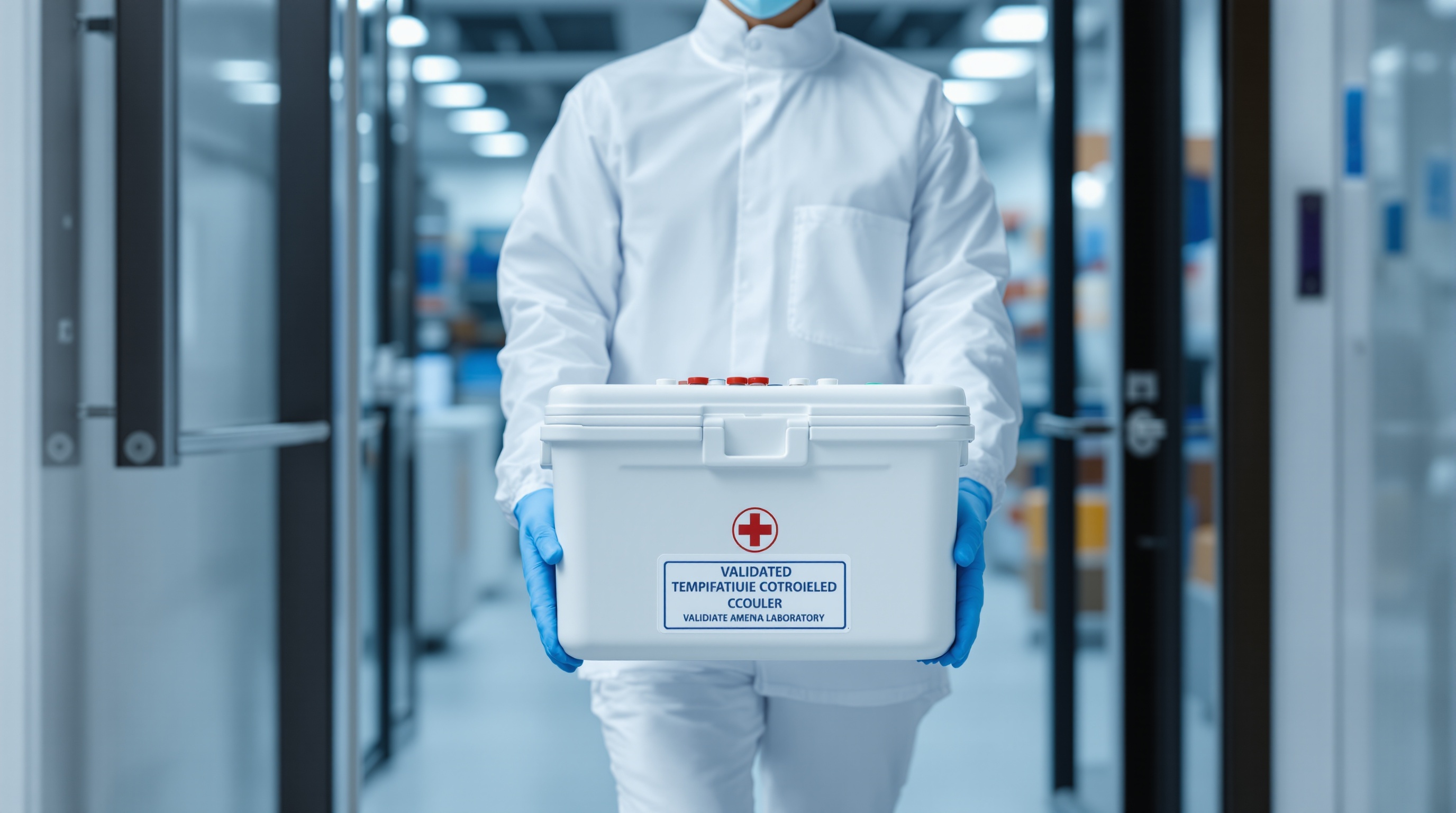
Every day, thousands of blood samples, urine specimens, tissue biopsies, and biological materials travel between GP clinics, hospitals, and pathology laboratories across South Africa. Unlike a standard courier package, these materials are perishable, temperature-sensitive, and often irreplaceable. A haemolysed blood sample or a thawed frozen specimen means the patient must be recalled, the test must be repeated, and the healthcare provider may face diagnostic delays.
This guide is written for general practitioners, clinic managers, hospital administrators, pathology collectors, and laboratory logistics coordinators who need to transport medical specimens safely, compliantly, and without compromising patient care.
In This Guide
Step 1: Identify Specimen Type and Temperature Requirements
The single most important decision in medical courier booking is temperature. Different specimens degrade at different rates, and South African summers make this even more critical. Before booking any courier, confirm the required transport temperature for each specimen type you are sending.
Standard Specimen Temperature Requirements
| Specimen Type | Transport Temp | Max Transit Time | Container |
|---|---|---|---|
| Blood samples (routine) | 2–8°C (refrigerated) | 4 hours | Vacutainer tubes in biohazard bag |
| Blood cultures | Room temp (20–25°C) | 2 hours | Blood culture bottles upright |
| Urine specimens | 2–8°C (refrigerated) | 6 hours | Sterile urine container |
| Tissue biopsies | 2–8°C on wet ice | 4 hours | Specimen jar with fixative |
| Frozen plasma/serum | -20°C (frozen) | 24 hours with dry ice | Cryovials in dry ice container |
| Vaccines and insulin | 2–8°C (cold chain) | 4 hours | Insulated validated cooler |
| COVID-19 / viral swabs | 2–8°C (refrigerated) | 72 hours | Viral transport medium tube |
Critical rule: If a specimen requires 2–8°C, confirm that your own packaging holds temperature with enough ice packs and your own temperature logger before handing it over, or do not book. A cooler that was conditioned to 2–8°C at 08:00 will exceed 15°C by 12:00 on a 30°C Johannesburg day without active monitoring and ice replenishment.
Step 2: Use Proper Specimen Containers and Packaging
Medical specimen packaging serves three purposes: containment, temperature stability, and biohazard safety. Each layer must meet South African health regulations and the receiving laboratory's specific requirements.
Triple-Layer Packaging Standard
- Primary container: The specimen tube, jar, or bag itself. Must be leak-proof and correctly sealed. Blood tubes must be filled to the correct volume — underfilled tubes can cause inaccurate results.
- Secondary container: A sealed biohazard bag or absorbent wrap that contains the primary container. If the primary container leaks, the secondary layer absorbs the spill and prevents cross-contamination.
- Tertiary container: The validated cooler box or insulated transport container that maintains temperature. For refrigerated specimens, this must contain ice packs or phase-change material pre-conditioned to the correct temperature.
Packaging Checklist Before Handover
- All tube caps are tight and sealed — no loose stoppers.
- Each specimen is in a separate biohazard bag (do not mix patient specimens in one bag).
- Absorbent material is included equal to the total volume of all specimens combined.
- The cooler is pre-conditioned: place ice packs in the cooler for at least 4 hours before loading specimens.
- A manifest is placed in the outer pocket (not inside with specimens) listing every specimen ID, patient initials, test type, and collection time.
- The outer container is labeled with biohazard symbol, "Diagnostic Specimens," and "Keep Refrigerated" or "Keep Frozen" as appropriate.
Step 3: Label and Document Every Specimen
A mislabeled specimen is worse than a lost specimen. The laboratory cannot process it, and the patient must be recalled. Your courier cannot fix labeling errors — they can only deliver what you provide.
Mandatory Label Information
- Patient full name and date of birth (or unique patient ID if your system uses one).
- Date and time of collection. Many tests have strict processing windows — the collection time determines whether the specimen is still valid.
- Type of specimen and test required. "Blood — FBC" or "Urine — MCS" tells the lab exactly what to do.
- Collector identification. The name or ID of the person who collected the specimen, for traceability.
- Source clinic or practice name and contact number. If the lab has a question, they need to reach the right person immediately.
Never Do This
- Send specimens with patient names on loose paper labels that can detach in transit.
- Mix specimens from multiple patients in one biohazard bag.
- Write on tube caps with permanent marker — caps get swapped between tubes.
- Forget to include the laboratory requisition form or send it in a separate delivery.
Step 4: Book a Temperature-Controlled Medical Courier
Temperature control is the quality standard that governs how medicinal products and biological materials are transported. In South Africa, the South African Health Products Regulatory Authority (SAHPRA) sets expectations for how couriers transport pharmaceuticals, vaccines, and diagnostic specimens. While not every medical courier holds formal certification, the processes they follow should align with temperature control and chain of custody best practice.
What to Ask Your Medical Courier Before Booking
Do you transport specimens direct with no intermediate stops?
The courier must route your sealed, pre-cooled cooler directly to the lab with no intermediate stops or handovers, so your cold chain stays intact for as short a time as possible. Your own temperature logger stays inside the sealed package and records throughout transit.
Are couriers trained in biohazard awareness and specimen handling?
Medical couriers must understand spill response, PPE requirements, and why specimens cannot be left in a hot vehicle. Ask for training records or certification.
Do you provide full chain of custody documentation?
Every handover — from your clinic to the courier, from the courier to the lab — must be documented with signature, timestamp, and GPS. This is your audit trail if a specimen is questioned.
Do you deliver to all major hospital groups and pathology labs?
Your courier must know the receiving protocols for Netcare, Mediclinic, Life Healthcare, Lancet, Ampath, and PathCare. Each group has different specimen drop-off procedures and security requirements.
What is your protocol for temperature excursions or delivery delays?
If your temperature logger shows an excursion above 8°C, or if traffic delays the delivery beyond the specimen stability window, you can decide whether to proceed or recall the patient. The courier keeps you informed on any delay with live GPS tracking.
Step 5: Monitor Cold Chain and Track in Real Time
Once your specimens are in transit, you are not done. The most common cause of specimen rejection is a cold chain break that went undetected until the lab opened the cooler. Your own temperature logger — placed inside the sealed package — is what catches this.
Continuous Monitoring Checkpoints
- Pre-transit validation: You record your cooler's temperature at handover and confirm it is within range before the courier loads the sealed package.
- In-transit data logging: Your temperature logger inside the sealed cooler records every 1–5 minutes. You review the data when the package arrives at the lab.
- Delivery validation: At the laboratory, you or the lab technician confirm the temperature was maintained throughout transit before accepting the specimens, using your own logger.
- Exception alerts: If the temperature exceeds the acceptable range at any point, the courier and your practice receive an immediate alert. You can then instruct the lab to prioritise testing or recall the patient.
GPS tracking is secondary but important. You need to know if the courier is stuck in traffic and whether the specimens will reach the lab before the processing cut-off. Most South African pathology labs stop accepting routine specimens at 15:00 for same-day processing.
Step 6: Confirm Receipt and Full Documentation
The handover at the laboratory is the final critical step. Your courier must not simply drop specimens at reception and leave. Proper medical courier protocols require:
- Delivery to the designated specimen reception area, not general reception or a security desk.
- Signature from a laboratory technician or designated specimen receiver, not a security guard or general receptionist.
- Verification of the manifest against actual specimens received. The lab signs off on the manifest, confirming they received every specimen listed.
- Temperature log handover. The courier provides the printout from the digital logger, and the lab notes the temperature range on their receipt record.
- Digital proof of delivery emailed to your practice within 15 minutes, including signature, photo, GPS coordinates, and timestamp.
Documentation Retention
Retain all delivery documentation — manifest, your temperature log, and POD — for at least 2 years. If a patient disputes a result or if an insurer audits your practice, these documents prove that the specimen was transported compliantly and that the result is reliable.
Specimen Types and Detailed Transport Requirements
Blood Samples (Whole Blood, Serum, Plasma)
Routine blood panels (FBC, U&E, LFT, glucose) require 2–8°C transport. The tubes must remain upright. Haemolysis — the rupture of red blood cells — is the most common reason for specimen rejection, and it happens when tubes are shaken, frozen, or exposed to extreme heat. Instruct your courier that tubes must be handled gently and kept vertical.
Blood Cultures
Blood cultures are unique: they must be transported at room temperature (20–25°C) and delivered within 2 hours of collection. Refrigeration kills some bacteria and yields false-negative results. If your clinic is more than 2 hours from the lab, discuss with the laboratory whether the specimen is still valid or whether the patient must be recalled.
Tissue Biopsies and Histopathology
Tissue biopsies require careful handling. They are typically placed in 10% neutral buffered formalin and transported at 2–8°C on wet ice. The formalin must completely cover the tissue. Never freeze a tissue biopsy intended for histopathology — freezing destroys cellular architecture and makes the sample unreadable under a microscope.
Frozen Specimens (Plasma, Serum, Genetic Material)
Frozen specimens travel at -20°C or below, typically using dry ice. Dry ice is classified as a dangerous good for air transport, so road courier is usually preferred for frozen specimens. Your courier must have dangerous goods awareness training if handling dry ice. Specimens must not thaw partially and refreeze — this destroys protein structures and invalidates results.
Vaccines and Temperature-Sensitive Pharmaceuticals
Vaccines are the most temperature-sensitive materials you will hand to a courier. The cold chain must be maintained at 2–8°C continuously, and even brief exposure above 8°C can reduce potency — so you must pre-cool and seal your vaccine shipment with your own validated cooler and logger. UrgentGo collects that sealed package and delivers it direct, fast, with full chain of custody.
Major Laboratory Destinations in South Africa
Johannesburg and Gauteng
- Lancet Laboratories: Multiple branches across Johannesburg, Pretoria, and Soweto. Central processing hub in Midrand.
- Ampath: Extensive network with main laboratory in Pretoria and satellite collection points across Gauteng.
- PathCare: Strong presence in northern Johannesburg and Pretoria, with dedicated specimen logistics team.
- National Health Laboratory Service (NHLS): Public sector laboratories serving state hospitals and clinics across all provinces.
Cape Town and Western Cape
- Lancet: Main laboratory in Pinelands with satellite branches across the Cape Peninsula.
- Ampath: Central laboratory in Bellville serving the greater Cape Town area.
- PathCare: City Bowl and Southern Suburbs coverage with routine specimen collection routes.
Durban and KwaZulu-Natal
- Lancet: Main laboratory in Durban CBD with collection points along the North Coast.
- Ampath: Central KZN laboratory in Westville serving Durban and Pietermaritzburg.
- PathCare: Umhlanga and central Durban branches with established courier routes.
Medical Courier Pricing in South Africa
| Service | Collection | Delivery | Price (excl. VAT) |
|---|---|---|---|
| Express Medical (2-hour) | Within 30 min | Within 2 hours | From R220 |
| Same-Day Medical | Within 60 min | Within 4 hours | From R150 |
| Recurring Lab Run | Scheduled | Scheduled | Flat rate |
| Frozen / Dry Ice | Within 60 min | Within 6 hours | From R280 |
Prices include direct, sealed transport, insurance, and digital POD. Recurring runs receive discounted healthcare rates. Frozen transport pricing varies by distance; you provide the dry ice.
Common Reasons Pathology Specimens Are Rejected
- Haemolysis: Red blood cells ruptured due to rough handling, freezing, or heat exposure. The most common rejection cause.
- Clotted specimens in anticoagulant tubes: EDTA tubes must be inverted gently 8–10 times immediately after collection. If not, the blood clots and the specimen is unusable.
- Insufficient volume: Underfilled tubes produce inaccurate results. The lab needs the full draw volume specified on the tube.
- Wrong container: A serum tube used for a test requiring plasma, or vice versa, leads to rejection.
- Exceeding stability window: Every specimen has a maximum time between collection and processing. If your courier delivers after this window, the lab rejects the specimen regardless of appearance.
- Label errors or missing information: No name, wrong date, or illegible writing means the lab cannot process safely.
Real Case: The Recalled Patient
"We sent blood cultures via a standard same-day courier. They were left in the courier's vehicle for three hours in summer heat. The lab rejected them for bacterial overgrowth. We had to recall the patient — a 78-year-old with suspected sepsis — for a second draw. We switched to UrgentGo's direct medical courier the same week — they collect sealed and deliver straight to the lab. No rejections since."
— GP Practice Manager, Johannesburg Northern Suburbs
Summary: Your Medical Courier Action Plan
- Identify every specimen type and its exact temperature requirement before booking.
- Use triple-layer packaging with validated coolers pre-conditioned to the correct temperature.
- Label every specimen completely and include a detailed manifest in the outer pocket.
- Book only with couriers trained in biohazard handling and direct routing — and keep your cold chain in your own hands.
- Monitor your cold chain data with your own logger throughout transit and at delivery.
- Confirm laboratory receipt with signature, manifest verification, and full documentation emailed to your practice.