
How to Prepare a Pallet
for Shipping in South Africa
A complete step-by-step guide to building a safe, secure pallet load — from stacking and strapping to stretch wrapping and labelling. Proper preparation prevents damage, speeds up transit, and protects your insurance cover.
Step-by-Step Pallet Preparation
Follow these 6 steps every time you build a pallet. Takes about 15 minutes and protects your freight through every touchpoint.

Choose a Sound Pallet
Start with a pallet in good condition. Inspect it for broken boards, protruding nails, or rot. A damaged pallet can collapse under load or during forklift handling.
- No cracked, split, or missing deck boards
- No protruding nails, staples, or splinters
- Rated to carry at least your total load weight
- Standard 1.2m × 1.2m or euro 1.2m × 0.8m footprint

Stack Your Load Correctly
Build a stable, square load. Place the heaviest items at the bottom, lighter items on top. Keep everything within the edges of the pallet — no overhang.
- Heaviest and widest boxes go on the bottom layer
- Stack in columns (box edges aligned) for maximum strength
- Keep the load flush within the pallet footprint
- Aim for a flat top so pallets can be stacked if needed
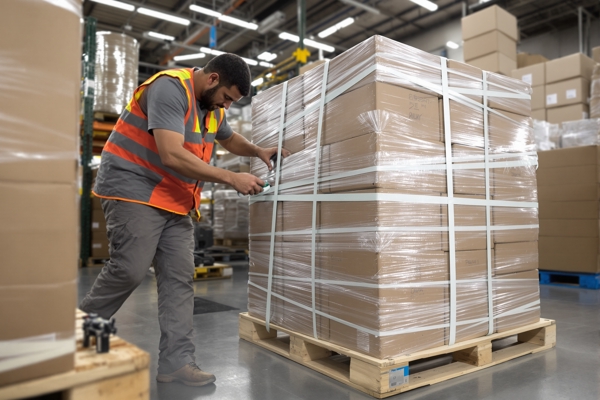
Strap or Band the Load
Secure the stack with strapping or banding before wrapping. Use polyester or steel strapping for heavy loads, polypropylene for lighter freight. Add corner protectors to prevent strap damage.
- Run at least two straps horizontally around the load
- Use corner boards to stop straps cutting into boxes
- Steel strapping for loads over 300 kg
- Ensure straps are tensioned but not crushing the cartons
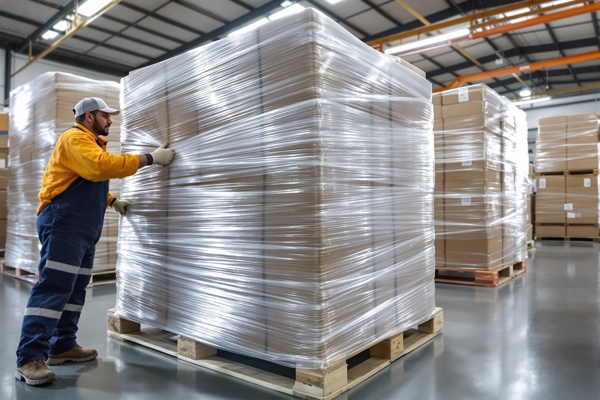
Wrap with Stretch Film
Wrap the entire load in stretch film using a top-to-bottom, overlapping spiral pattern. The film should bind the cartons to the pallet base so the whole unit moves as one.
- Wrap from the pallet base upward, overlapping by 50%
- Use at least 3 full revolutions around the base
- Lock the film around the pallet itself, not just the boxes
- For tall loads, apply a double pass for extra rigidity

Label and Document Clearly
Attach your shipping label and any handling instructions flat on the side of the load. Never place labels on the top where they can be covered by another pallet.
- Place labels on at least two sides of the load
- Mark "Heavy", "Fragile", or "This Way Up" as needed
- Include a packing list or delivery note in a pouch
- Remove or cover any old labels from previous shipments
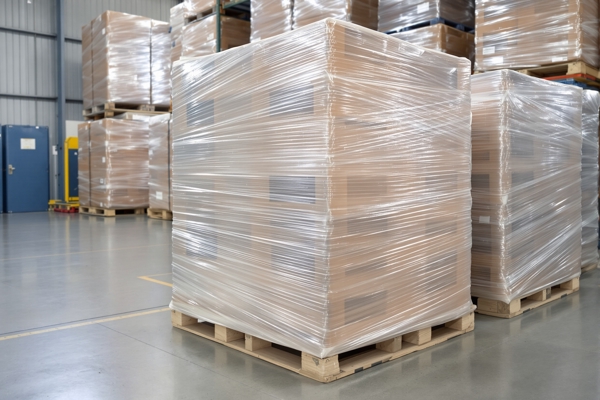
Protect Against Weather
If your pallet may be exposed to the elements during transit or storage, add a protective layer. A pallet cover or shrink hood protects against rain and dust on open vehicles.
- Use a pallet cover or shrink hood for open-truck transport
- Shrink-wrap fully to minimise dust and moisture ingress
- For water-sensitive goods, line the base with plastic sheeting
- Photograph the finished, labelled load before handover
What You Need to Prepare a Pallet
Most of these supplies are available from any packaging supplier, Makro, or Builders Warehouse. Keep them on hand before your collection.
Wooden Pallet
Standard 1.2m × 1.2m or euro 1.2m × 0.8m base in sound condition.
Stretch Film
Clear wrap to bind cartons to the pallet and protect against dust and shifting.
Strapping / Banding
Polyester, steel, or polypropylene strapping to lock the load together.
Corner Protectors
Edge boards that stop straps cutting into cartons and protect corners.
Labels & Pouches
Shipping labels, handling marks, and a weatherproof document pouch.
Pallet Cover
Optional shrink hood or cover for weather protection on open vehicles.
Common Pallet Preparation Mistakes
These are the mistakes we see most often at collection — and how to avoid them.
Overhanging the pallet edges
Cartons that hang over the pallet edge get crushed during handling and can catch on loading equipment. Keep everything flush within the footprint.
Pyramid or uneven stacking
Stacking boxes in a pyramid or staggered pattern creates a weak, unstable load that shifts in transit. Stack in straight columns with aligned edges.
Using a damaged pallet
A pallet with broken boards or protruding nails can collapse or puncture your goods. Always inspect and replace damaged pallets before loading.
Skipping stretch wrap
Without stretch film, boxes shift independently and fall during transit. Wrap the full load so cartons and pallet move as one secure unit.
No strapping on heavy loads
Heavy freight without strapping can tip on corners and roundabouts. Use banding with corner protectors for anything over 300 kg.
Labels on the top face
Labels placed on top get covered when pallets are double-stacked. Put labels on the sides so they stay visible throughout the journey.
Pre-Handover Pallet Checklist
Tick off every item before handing your pallet to the driver.
Why Proper Pallet Preparation Matters in South Africa
A pallet travels through multiple hands between collection and delivery — forklift drivers, sorting depots, linehaul trucks, and final-mile couriers. Each touchpoint is a chance for a poorly built pallet to shift, topple, or crush the goods underneath it. On long South African corridors such as Johannesburg to Cape Town or Durban to Pretoria, freight is often double-stacked and exposed to the elements.
The single most common cause of pallet freight damage isn't rough handling — it's poor preparation. A load that overhangs the pallet, is stacked unevenly, or isn't wrapped will fail long before it reaches its destination. Carriers are not liable for damage caused by inadequate preparation, and insurance claims will be rejected if the load wasn't built to standard.
What Size Pallet Should I Use?
South African freight uses two main pallet footprints. Choosing the right one affects pricing, truck capacity, and how your load is handled:
| Pallet Type | Footprint | Best For |
|---|---|---|
| Standard | 1.2m × 1.2m | General freight, retail stock, bulk cartons |
| Euro | 1.2m × 0.8m | European-standard goods, lighter loads |
| Half | 1.2m × 1.0m | Mid-volume shipments, regional distribution |
| Quarter | 0.6m × 0.8m | Small orders, samples, light parts |
Pallet Preparation and Insurance
Proper preparation is a prerequisite for any successful freight insurance claim. If your goods are damaged and the cause is found to be inadequate stacking, wrapping, or securing, the claim will be rejected — regardless of the cover you purchased. This is standard practice across all South African carriers.
The safest approach is to combine sound preparation with the right cover. UrgentGo includes standard transit protection up to R50,000 on every pallet shipment. For higher-value freight, contact our team to upgrade your cover before dispatch. Always photograph the finished, labelled load — these photos are your primary evidence in any claim.
Pallet Preparation Tips for Business Senders
If you dispatch pallets regularly, preparation consistency becomes as important as speed. Here are tips for warehouses, manufacturers, and distributors:
- Standardise your pallet footprint so truck loading is predictable
- Buy stretch film and strapping in bulk to reduce per-load cost
- Train staff on a single stacking standard to avoid variance
- Pre-print labels in batches to speed up dispatch
- Consider scheduled collections and dedicated lane pricing for volume
Related Guides and Services
Pallet Preparation FAQs
Answers to the questions we hear most at collection.
The standard South African pallet is 1.2m × 1.2m, with the euro pallet (1.2m × 0.8m) also widely accepted. Half and quarter pallets are available for smaller loads. Choose the smallest pallet that comfortably fits your goods without overhang.
Pallet Built and Ready to Ship?
Once your load is stacked, strapped, and wrapped, UrgentGo handles the rest — collection, tracking, and nationwide delivery.