
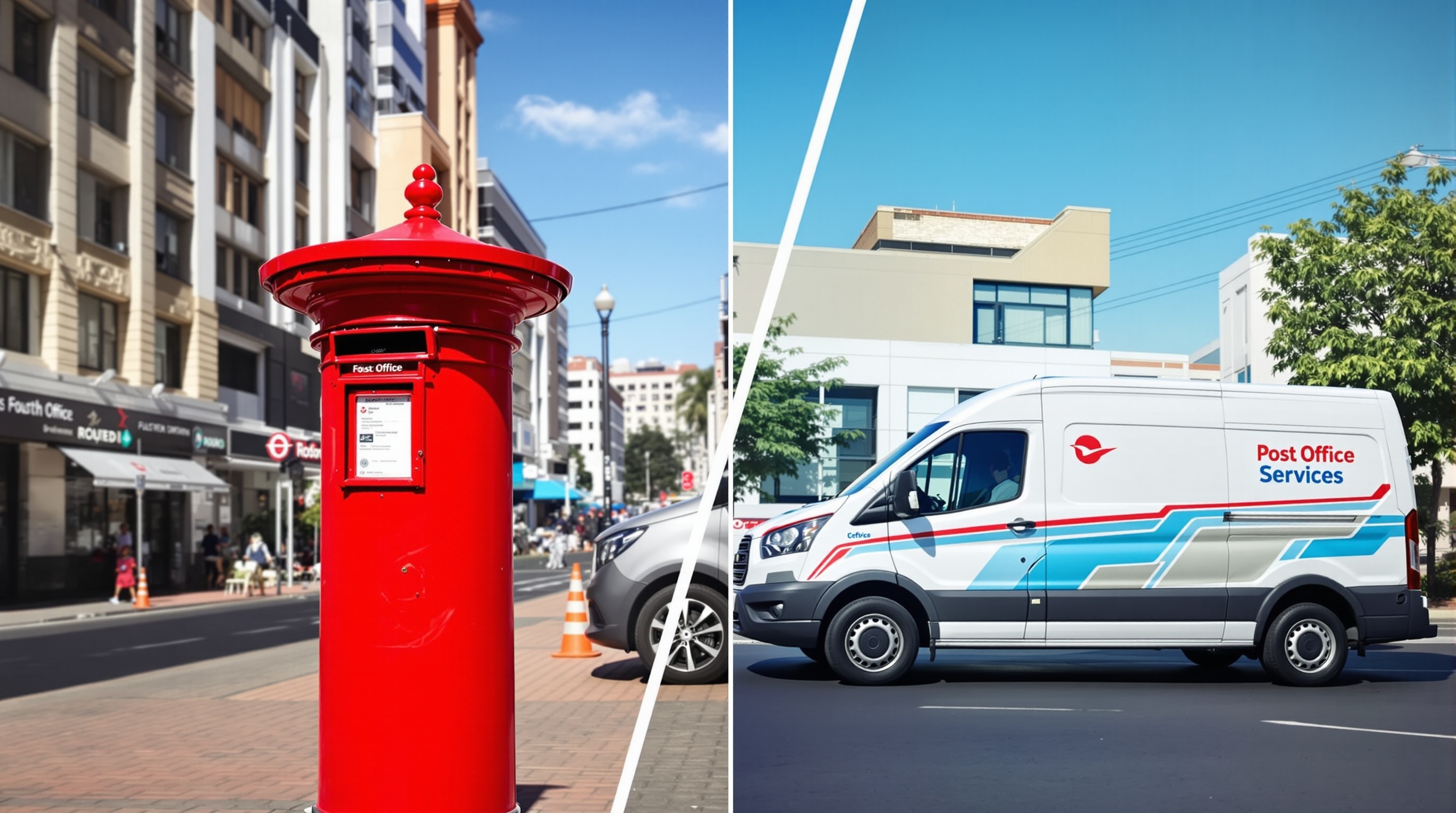
The Big Question: Courier or Post Office?
Every South African has faced this dilemma: should I send this parcel through a courier or drop it off at the Post Office? On the surface, the Post Office seems cheaper — but as anyone who's dealt with delayed deliveries, lost parcels, or frustratingly long queues will tell you, price isn't everything.
With the South African Post Office (SAPO) facing well-documented operational challenges and business rescue proceedings, more South Africans than ever are switching to private courier services. But is a courier always the better choice? Let's break it down.
Quick Summary
For anything urgent, valuable, or business-critical: use a courier. For non-urgent, low-value items where you can handle delays: the Post Office may still work — but manage your expectations.
Speed: How Fast Can Each Service Deliver?
This is where the difference becomes immediately obvious. Courier services operate on defined timelines with guaranteed delivery windows. The Post Office operates on estimated timelines that are often unreliable.
| Service Type | Courier | Post Office |
|---|---|---|
| Same-Day (Local) | 2-6 hours — guaranteed | Not available |
| Overnight (National) | Next business day — guaranteed | Not available |
| Economy (National) | 2-3 business days | 7-21+ business days (unreliable) |
| International | 3-10 business days | 14-60+ business days |
The speed gap is enormous. A courier can deliver a parcel from Johannesburg to Cape Town overnight — something the Post Office typically takes two to three weeks to do, assuming the parcel doesn't go missing along the way.
Reliability: Will Your Parcel Actually Arrive?
This is arguably the most important factor. You can tolerate a slightly slower delivery if you're confident the parcel will reach its destination. But what are the actual reliability numbers?
Courier Reliability
- On-time delivery rates typically above 95% for reputable providers
- Proof of delivery (POD) with signature, photo, or GPS coordinates
- Guaranteed delivery windows — if they miss it, you get compensation
- Dedicated driver handles your parcel from pickup to delivery
- Professional packaging handling reduces damage risk
Post Office Reliability
- No guaranteed delivery timelines
- Well-documented issues with parcel losses and items going missing
- Staff shortages and facility closures affecting operations
- No compensation for delayed or lost items on standard services
- Multiple handling points increase damage and loss risk
Important Note
As of 2025, the South African Post Office is under business rescue. Many branches have closed, and service reliability has declined significantly. For important documents or valuable items, using a courier is strongly recommended.
Cost Comparison: Is the Post Office Actually Cheaper?
On paper, Post Office rates appear cheaper. But when you factor in insurance, tracking, reliability, and the value of your time, the picture changes dramatically.
| Package | Courier (Economy) | Post Office |
|---|---|---|
| Small document (under 1kg) | R95 - R150 | R40 - R70 |
| Medium parcel (1-5kg) | R120 - R200 | R70 - R120 |
| Large parcel (5-15kg) | R180 - R350 | R120 - R220 |
The price difference is typically R50-R150 per package. Ask yourself: is saving that amount worth the risk of a lost parcel, a two-week delay, or an unhappy customer? For businesses, the answer is almost always no.
Hidden Costs of Using the Post Office
- Time cost: Queuing at the Post Office, travelling there and back, and following up on delayed items eats into your workday.
- Replacement cost: If a parcel goes missing, you bear the full cost of replacing the contents and resending.
- Reputation cost: Late deliveries damage your brand if you run a business.
- Insurance: You need to pay extra for registered or insured mail to get even basic coverage.
- Fuel and parking: Driving to the Post Office and back costs money too.
Tracking: Can You Monitor Your Parcel?
Courier services offer real-time GPS tracking with automated SMS and email notifications at every stage: collected, in transit, out for delivery, and delivered. You can see exactly where your parcel is at any moment.
The Post Office offers basic tracking on registered mail and speed services, but it's often unreliable. Updates can be days or weeks apart, and the tracking may show "in transit" for extended periods with no real indication of where the parcel actually is.
Service and Convenience
Courier Services Offer:
- Door-to-door pickup and delivery — you don't leave your home or office
- WhatsApp-based booking and support with many providers
- Flexible pickup times, including same-day collection
- Weekend and after-hours delivery options
- Dedicated account managers for business clients
- Online portals for managing multiple shipments
- Integration with e-commerce platforms like Shopify and WooCommerce
Post Office Services Offer:
- You must physically visit a branch during operating hours
- Limited operating hours (typically 8:30 AM to 4:30 PM weekdays, Saturday mornings)
- Long queues, especially at month-end and during holidays
- No pickup service — you bring everything to them
- Recipients often need to collect parcels from the Post Office
- Many branches have reduced services or have closed entirely
Insurance and Compensation
Most courier companies include basic insurance coverage in their standard rates — typically R1,000 to R2,000 of cover. Additional insurance is available for valuable items. If a courier loses or damages your parcel, there's a clear claims process and you will be compensated.
The Post Office offers limited compensation on standard parcels. Even registered mail only covers up to R100 unless you purchase additional insurance. The claims process is notoriously slow and bureaucratic, with many claimants reporting months of waiting with no resolution.
When Should You Use the Post Office?
To be fair, there are still some situations where the Post Office might be appropriate:
- Sending non-urgent personal letters or greeting cards
- Mailing items to Post Office boxes in remote areas where couriers don't deliver
- Very low-value items where the risk of loss is acceptable
- When the recipient specifically requests Post Office delivery
- Large-volume bulk mail where courier costs would be prohibitive
For everything else — especially anything related to your business — a courier is the smarter choice.
When You Should Definitely Use a Courier
- Legal documents, contracts, and court filings with hard deadlines
- Medical samples, prescriptions, and pathology specimens
- E-commerce orders where customer satisfaction matters
- Valuable items like electronics, jewellery, or important documents
- Time-sensitive business deliveries
- Anything you'd be genuinely upset about if it went missing
- International shipments where tracking and reliability are non-negotiable
Pro Tip from UrgentGo
For businesses, the cost difference between a courier and the Post Office is often offset by the time saved not dealing with delays, lost parcels, and customer complaints. Calculate your true cost per delivery — including your time — before deciding.
What About Speed Services and Other Courier Networks?
The Post Office does offer Speed Services Couriers — a premium tracked service that's faster than standard mail. However, it still operates within the Post Office infrastructure and has been affected by the same operational challenges. Delivery times are inconsistent, and the service is not comparable to a dedicated courier.
Franchise courier networks operate as drop-off and collection points through partnerships with various couriers, rather than running their own delivery fleet. They're a step above the Post Office but still essentially retail resellers of courier services — you'll get better rates going direct.
How to Switch From the Post Office to a Courier
If you're ready to make the switch, here's a simple process:
- Identify your shipping volume: How many parcels do you send per month? This determines whether you need a business account or can use ad-hoc bookings.
- Map your routes: Where do you send to most often? Make sure your chosen courier covers those areas.
- Compare providers: Look at pricing, coverage, tracking quality, and customer support responsiveness.
- Open an account: Business accounts typically give you better rates and dedicated support.
- Run a trial: Send a few test parcels to evaluate the service before committing to high volumes.
- Notify your customers: Let them know you've upgraded to a courier service — it's a selling point.
Final Verdict: Courier vs Post Office
For the vast majority of South Africans — especially businesses, professionals, and anyone sending something they care about — a courier service is the clear winner. The combination of speed, reliability, tracking, door-to-door convenience, and insurance coverage makes it worth the small premium over Post Office rates.
The Post Office still has a role for basic, low-priority mail. But for anything that matters — from legal documents to e-commerce orders to medical supplies — don't gamble with the Post Office. Use a courier.